Multiple Choice
A 62-year-old hospitalized man is evaluated for new-onset, right lower extremity pain. The patient underwent bypass surgery for 3-vessel coronary artery disease 2 months ago. He arrived at the emergency department 2 nights ago due to recurrent chest pains. At that time, ECG showed sinus rhythm with no ST-segment changes, but cardiac troponin I levels were elevated. The patient was initiated on unfractionated heparin, antiplatelet agents, a beta blocker, and a nitrate. A coronary angiogram was performed via the radial artery; it revealed graft insertion site stenosis and was treated with stenting. Postintervention echocardiography revealed left ventricular ejection fraction of 50% with no regional wall motion abnormalities. This morning, the patient had new, sudden-onset, right lower extremity pain. He has never had pain in that extremity before. The patient has a history of hypertension, hyperlipidemia, and type 2 diabetes mellitus. Current medications include aspirin, clopidogrel, rosuvastatin, metoprolol, losartan, isosorbide mononitrate, basal-bolus insulins, and subcutaneous heparin at a prophylactic dose. The patient is a former smoker with a 30-pack-year history. Temperature is 37.6 C (99.7 F) , blood pressure is 138/84 mm Hg, pulse is 96/min, and respirations are 18/min. Physical examination reveals normal jugular venous pressure, clear lungs, no heart murmurs, and a soft, nontender abdomen. The right leg is tender and cool to the touch when compared to the left leg. Right lower extremity distal pulses are diminished, but capillary refill is intact. Left leg examination is normal with the exception of healed scars from previous saphenous vein harvesting. Neurological examination is normal. Laboratory results are as follows: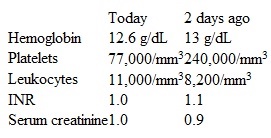 Analgesics and other supportive measures are provided, and vascular surgery is consulted. Diagnostic studies are performed, but the results are pending. Which of the following is the most appropriate next step in management of this patient?
A) Continue current therapy and await confirmatory test results
B) Discontinue heparin and anticoagulate with oral warfarin
C) Discontinue heparin and begin intravenous direct thrombin inhibitor
D) Discontinue heparin and monitor closely
E) Switch heparin to intravenous therapeutic dosing
Correct Answer:

Verified
Correct Answer:
Verified
Q677: A 47-year-old-man comes to the physician for
Q678: A 31-year-old woman is brought to the
Q679: A 40-year-old man comes to the office
Q680: A 4-year-old boy is brought to the
Q681: A 6-month-old girl is brought to the
Q683: During the same visit, she also expressed
Q684: A 23-year old Caucasian primipara gives birth to
Q685: A 14-year-old boy is brought to the
Q686: A 46-year-old man comes to the physician's
Q687: A 15-year-old boy is brought to the