Multiple Choice
A 3-day-old boy is in the nursery for routine evaluation. He is breastfed exclusively and is passing adequate urine and stool. He was born to a 22-year-old African American woman with an unremarkable prenatal course. Prenatal laboratory studies showed a maternal blood type O positive. The infant was delivered by repeat cesarean section at 39 weeks gestation, and his blood type is O positive. A transcutaneous bilirubin level obtained at 24 hours of life was 3.4 mg/dL, which was considered low risk. He has a healthy older sister who did not have jaundice in the newborn period. Vital signs are normal. Physical examination shows jaundice extending from the head to the thighs. The lungs are clear to auscultation. Abdominal examination reveals no tenderness, distension, or organomegaly. Laboratory results from 72 hours of life are as follows: 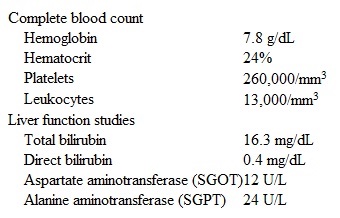 Direct Coombs test is negative. Serum bilirubin repeated 4 hours later is 20 mg/dL, and phototherapy treatment is initiated. Which of the following is the most likely diagnosis?
A) ABO incompatibility
B) Biliary atresia
C) Breast milk jaundice
D) Glucose-6-phosphate dehydrogenase deficiency
E) Physiologic jaundice
Correct Answer:

Verified
Correct Answer:
Verified
Q599: A 59-year-old obese woman with a history
Q600: A 65-year-old white woman comes to the
Q601: A 63-year-old man comes to the emergency
Q602: A 19-year-old woman, gravida 1 para 0,
Q603: A 46-year-old truck driver comes to the
Q605: A 64-year-old man comes to the physician
Q606: A 35-year-old Caucasian man is seen in
Q607: A 28-year-old woman, gravida 1 para 0,
Q608: A 30-year-old woman comes to the office
Q609: A 51-year-old woman comes to the office