Multiple Choice
A 45-year-old woman is evaluated on postoperative day 3 due to nausea and vomiting. The patient underwent a total abdominal hysterectomy for symptomatic uterine fibroids, and the surgery was complicated by ureter injury and stent placement. She was placed on a clear liquid diet on postoperative day 2, when she began to have some nausea. Since then, the patient has had multiple episodes of vomiting but no hematemesis. She has not passed flatus or had a bowel movement since the surgery. Temperature is 37.2 C (99 F) , blood pressure is 130/80 mm Hg, and pulse is 80/min. The abdomen is mildly distended and has decreased bowel sounds. The incision is tender to palpation but has no surrounding erythema or discharge. Laboratory results are as follows: 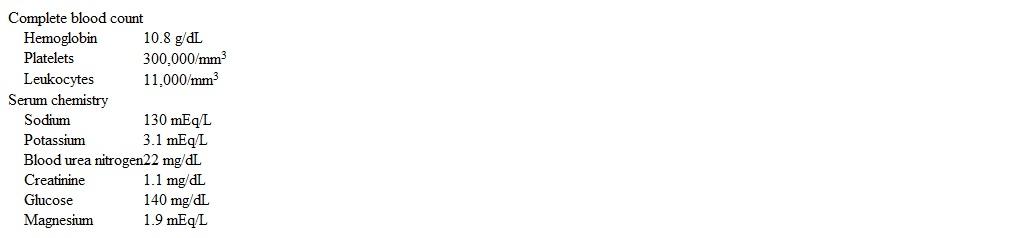 Abdominal x-ray is shown in the exhibit.
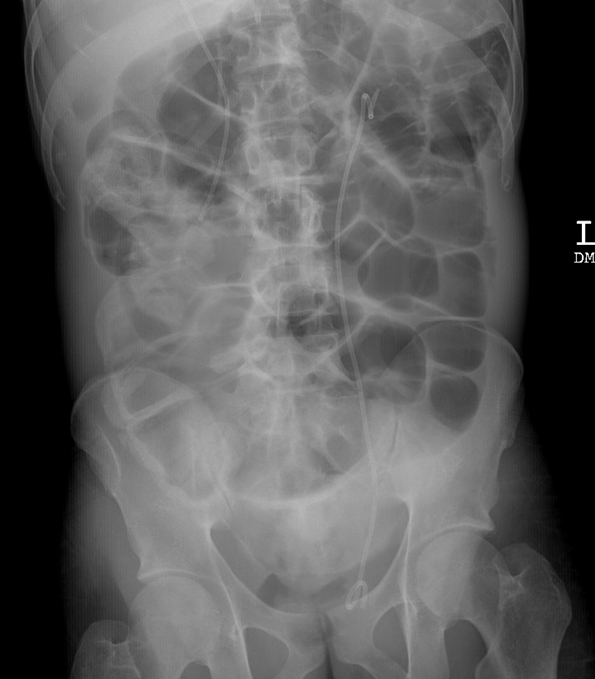 In addition to intravenous fluid administration, which of the following is the best next step in the management of this patient?
A) Bowel rest and serial examinations
B) Broad-spectrum antibiotics
C) Rectal enema
D) Small bowel follow-through
E) Urgent surgical exploration
Correct Answer:

Verified
Correct Answer:
Verified
Q147: A 30-year-old man comes to the emergency
Q148: A 22-year-old previously healthy man is brought
Q149: A 54-year-old man comes to the emergency
Q150: A 65-year-old woman comes to the emergency
Q151: A 23-year-old man is brought to the
Q153: A 73-year-old man is seen in the
Q154: A 38-year-old woman comes to the office
Q155: A 37-year-old woman is brought to the
Q156: A 23-year-old man comes to the emergency
Q157: A 75-year-old man comes to the office