Multiple Choice
A 10-minute-old neonate is evaluated in the delivery room for low oxygen saturation and difficulty breathing. The patient was born at 36 weeks gestation to a 37-year-old mother whose pregnancy was complicated by poorly controlled type 2 diabetes mellitus. Membranes were ruptured 3 hours prior to delivery, and the fluid was clear. Apgar scores were 5 and 7 at 1 and 5 minutes, respectively. Temperature is 36.9 C (98.4 F) , pulse is 166/min, and respirations are 70/min. Examination shows cyanosis of the lips and mucous membranes. The patient is grunting and has intercostal and subcostal retractions. Cardiac examination shows a 1/6 systolic ejection murmur at the left upper sternal border. Breath sounds are decreased bilaterally. The abdomen is soft with no organomegaly. Pulses are 2+ in all extremities. Pulse oximetry on room air is 64% in the right hand and foot. An orogastric tube is placed, and the patient is started on continuous positive airway pressure with supplemental oxygen. Pulse oximetry improves to 82%. Chest radiograph is shown in the image below: 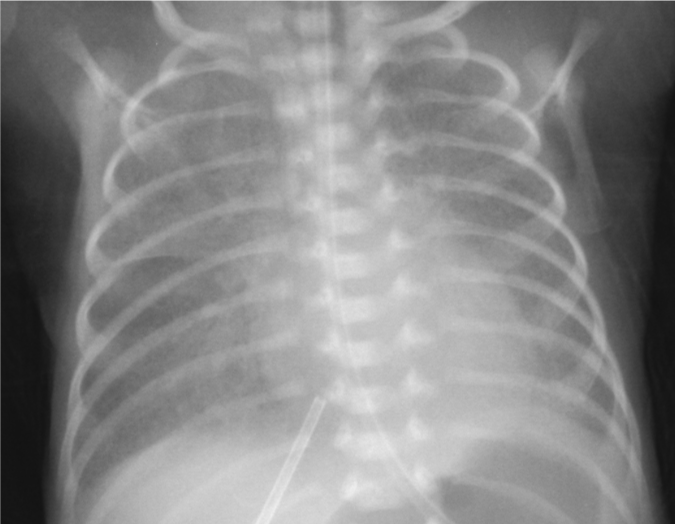 Blood cultures are obtained, and intravenous antibiotics are started. Which of the following is the most appropriate pharmacotherapy for this patient?
A) Corticosteroids
B) Indomethacin
C) Nitric oxide
D) Prostaglandin
E) Surfactant
Correct Answer:

Verified
Correct Answer:
Verified
Q509: A 12-day-old boy is brought to the
Q510: A 3-month-old full-term boy is brought to
Q511: A 20-year-old woman comes to the office
Q512: A 63-year-old man is brought to the
Q513: A 1-year-old boy is brought to the
Q515: A 12-year-old boy is brought to the
Q516: A 14-year-old boy is brought to the
Q517: A boy is brought to the nursery
Q518: A 13-year-old girl with cystic fibrosis is
Q519: A newborn boy is being evaluated in