Multiple Choice
A 1-day-old boy is admitted to the neonatal intensive care unit due to microcephaly. Microcephaly and ventriculomegaly were first seen during an antenatal sonogram at 20 weeks gestation. Follow-up ultrasounds revealed progressive fetal growth restriction for which a cesarean delivery was performed at 35 weeks gestation. The mother is a 28-year-old woman, gravida 3 para 3, who is healthy and took prenatal vitamins. The infant's 2 siblings, age 18 months and 4 years, are healthy. Weight and length are at the 5th percentile, and head circumference is <3rd percentile. Temperature is 37.2 C (99 F) , and the remaining vital signs are normal. Physical examination shows a jaundiced infant who is small for gestational age. The lungs are clear to auscultation, and no murmurs are audible. The liver edge is palpable at the level of the umbilicus. Platelet count is 25,000/mm3. CT scan of the head is shown below. 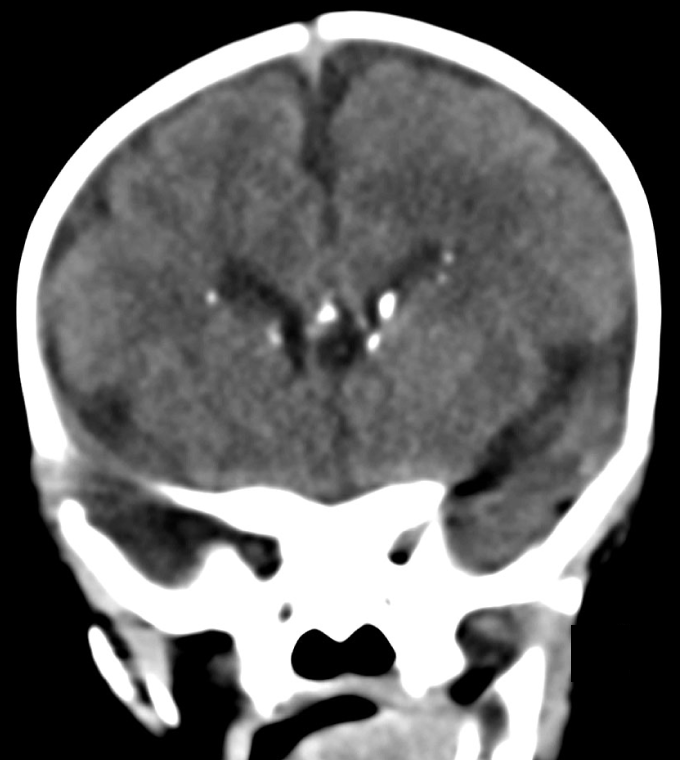 The most likely source of congenital infection is maternal exposure to which of the following?
A) Cat feces
B) Genital lesion
C) Mosquitoes
D) Raw meat
E) Saliva
Correct Answer:

Verified
Correct Answer:
Verified
Q202: A 5-year-old girl is brought to the
Q203: The parents of a 16-year-old boy come
Q204: A 3-week-old girl is brought to the
Q205: A 6-month-old boy is brought to the
Q206: A 6-year-old boy is brought to the
Q208: A 4-year-old boy is brought to the
Q209: A 67-year-old man is brought to the
Q210: A 4-year-old boy is brought to the
Q211: An 8-year-old boy is brought to the
Q212: An 8-year-old boy is brought to the