Multiple Choice
A 17-year-old boy with chronic immune thrombocytopenia (ITP) comes to the clinic for follow-up. The patient was initially diagnosed with ITP over a year ago when he developed prolonged epistaxis after colliding with another player during a soccer game. This past school year the patient has been unable to participate in sports due to frequent episodes of mucosal bleeding after mild trauma warranting pharmacologic intervention. He has received treatment with multiple medications, including intravenous immunoglobulin and prednisone. His response to treatment has been transient, with platelet counts that have decreased rapidly to the 10,000/mm3 range at follow-up visits. Physical examination shows diffuse petechiae and a few areas of ecchymosis along the thighs but is otherwise normal. Laboratory results are as follows: 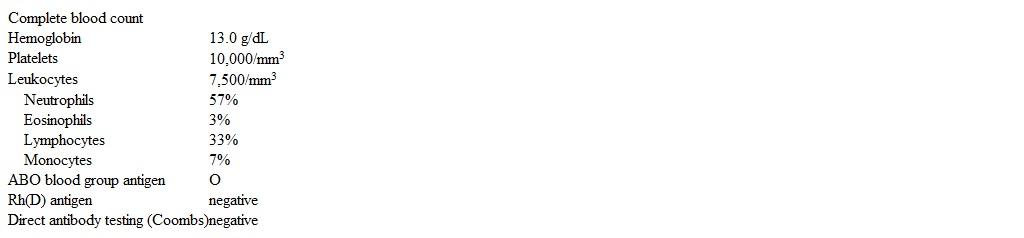 Workup for autoimmune disorders and chronic viral infections is negative. Bone marrow evaluation reveals a normocellular marrow with slightly increased megakaryocytes. Which of the following is the best next step in management of this patient?
A) Anti-D immune globulin
B) Desmopressin
C) Epoetin alfa
D) Granulocyte colony-stimulating factor
E) Scheduled platelet transfusion
F) Splenectomy
Correct Answer:

Verified
Correct Answer:
Verified
Q575: A 50-year-old woman is brought to the
Q576: A 4-year-old girl is brought to the
Q577: A 6-month-old boy is brought to the
Q578: A 13-month-old boy is brought to the
Q579: A 3-year-old boy is brought to the
Q581: A 17-year-old boy is evaluated in the
Q582: A 3-year-old girl is brought to the
Q583: A 42-year-old previously healthy woman comes to
Q584: A 13-year-old girl is brought to the
Q585: A 2-year-old boy is brought to the