Multiple Choice
A 23-year-old African American man with sickle cell disease (Hb SS disease) comes to the clinic for follow-up. He was admitted to the hospital 2 weeks ago due to headaches, slurred speech, and right-sided arm weakness. Imaging studies of the brain revealed no evidence of hemorrhage. The patient received an exchange transfusion, and his symptoms markedly improved. He was discharged home after 5 days of supportive care. Current medications include folate, acetaminophen, oxycodone, and a multivitamin.
Blood pressure is 123/77 mm Hg and pulse is 82/min. Oxygen saturation is 99% on room air. The lungs are clear to auscultation. A 2/6 systolic murmur is heard at the left upper sternal border. Muscle strength is 4/5 in the right arm and 5/5 in the left arm. The rest of the neurological examination, including speech and coordination, is within normal limits.
Laboratory results are as follows: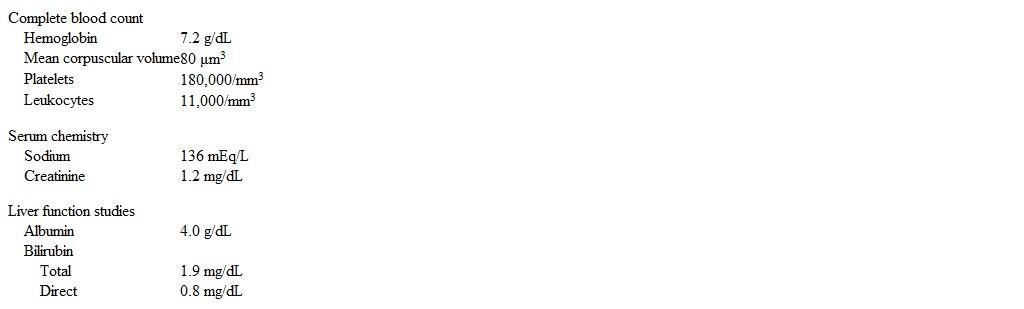 Baseline hemoglobin is approximately 6.9 g/dL. Chest x-ray is clear.
Which of the following is the best strategy to prevent further similar events in this patient?
A) Aspirin therapy
B) Chronic simple transfusion therapy
C) Intermittent exchange transfusions
D) Nimodipine
E) Rivaroxaban therapy
Correct Answer:

Verified
Correct Answer:
Verified
Q289: A 28-year-old woman comes to the office
Q290: An 80-year-old woman presents to the clinic
Q291: A 28-year-old woman comes to the office
Q292: A 37-year-old woman comes to the physician
Q293: A 32-year-old man comes to the clinic
Q295: A 65-year-old woman comes to the physician
Q296: A 35-year-old woman comes to the office
Q297: A 75-year-old man comes to the physician
Q298: A 23-year-old man comes to the physician
Q299: A 74-year-old woman with Alzheimer disease is