Multiple Choice
A 51-year-old man comes to the emergency department with sudden-onset, sharp, left flank pain; nausea; and vomiting. He has had no dysuria or hematuria. The patient has no past medical conditions and takes no daily medications. He does not use tobacco, alcohol, or illicit drugs. Temperature is normal. On examination, the patient appears to be in severe pain and cannot find a comfortable position on the bed. There is no abdominal rigidity or rebound, and no masses are palpable. Cardiopulmonary examination is normal. There is no peripheral edema. Imaging shows a 1-cm calculus in the left proximal ureter at the level of the L3 vertebra; the renal pelvis and proximal ureter are dilated, as shown in the exhibit. 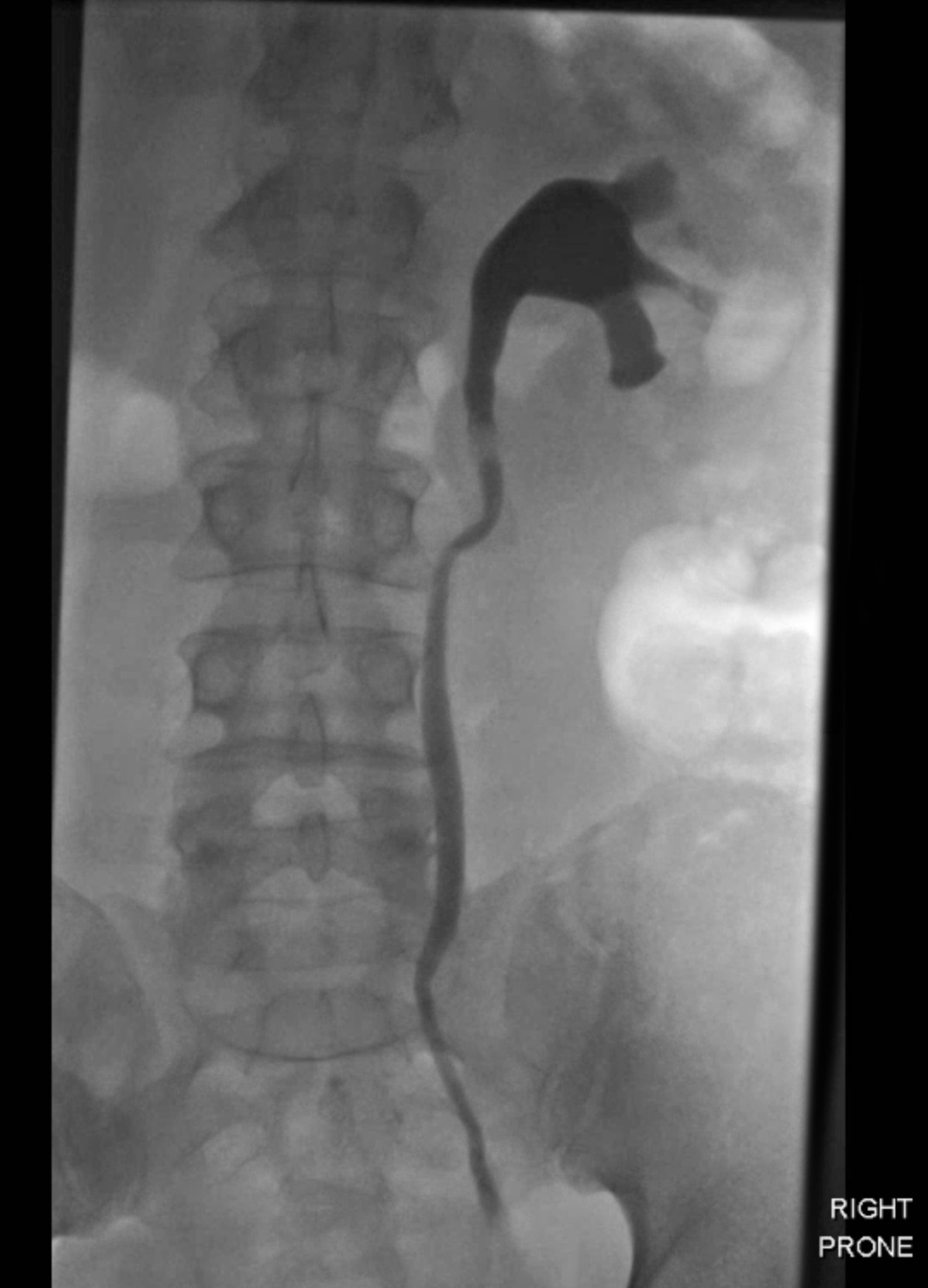
Which of the following is most likely increased in this patient's left kidney?
A) Bowman space oncotic pressure
B) Glomerular filtration
C) Intraglomerular capillary hydrostatic pressure
D) Tubular hydrostatic pressure
E) Tubular oncotic pressure
Correct Answer:

Verified
Correct Answer:
Verified
Q75: A newborn is transferred to the neonatal
Q76: A 55-year-old man comes to the emergency
Q77: A 67-year-old man is brought to the
Q78: A 6-month-old girl is brought to the
Q79: A 72-year-old man comes to the emergency
Q81: A 4-year-old girl is brought to the
Q82: An 18-year-old, previously healthy man comes to
Q83: A 26-year-old woman comes to the office
Q84: A 6-year-old girl is brought to the
Q85: A 43-year-old man comes to the office