Multiple Choice
A 65-year-old man with a history of chronic gastroesophageal reflux comes to the clinic due to dysphagia. The patient has had difficulty swallowing foods such as steak or hard-boiled eggs but is able to drink hot tea and coffee without any issues. Increasing the frequency of his proton pump inhibitor to twice daily did not improve symptoms. He has also lost 6.8 kg (15 lb) over the past 4 months. The patient has a history of hypertension, hyperlipidemia, and osteoarthritis. Medications include amlodipine, atorvastatin, and ibuprofen as needed. He drinks 2 or 3 glasses of wine with dinner most nights but does not use tobacco or illicit drugs. Vital signs are within normal limits. BMI is 32 kg/m2. Physical examination is unremarkable. Esophagogastroduodenoscopy reveals a 4-cm mass surrounded by a large segment of discolored mucosa in the lower half of the esophagus. Esophagogastrectomy results are shown in the image below: 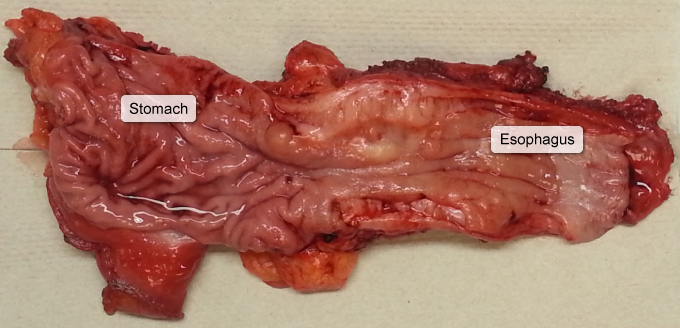 Which of the following is the most likely predisposing factor for this patient's esophageal disease?
A) Alcohol use
B) Chronic nonsteroidal anti-inflammatory drug use
C) Helicobacter pylori infection
D) Obesity
E) Repeated thermal injury
Correct Answer:

Verified
Correct Answer:
Verified
Q57: A 21-year-old woman comes to the office
Q58: A 6-year-old boy is brought to the
Q59: A 24-year-old woman comes to the office
Q60: A 34-year-old woman comes to the office
Q61: A 38-year-old woman comes to the urgent
Q63: A 55-year-old man comes to the office
Q64: A 43-year-old man is hospitalized with recent-onset oliguria
Q65: A 24-year-old woman comes to the physician
Q66: A 60-year-old man comes to the emergency
Q67: A 56-year-old man comes to the emergency