Multiple Choice
A neonate at 38 weeks gestation is delivered vaginally following an uncomplicated pregnancy. Immediately after delivery, the neonate has respiratory distress. Examination shows cyanosis, tachypnea, and poor perfusion. The patient is emergently intubated, and mechanical ventilation is initiated. A nasogastric tube is also inserted. On auscultation, asymmetric aeration with decreased left-sided breath sounds are noted. The abdomen is scaphoid. A chest x-ray is shown in the exhibit. 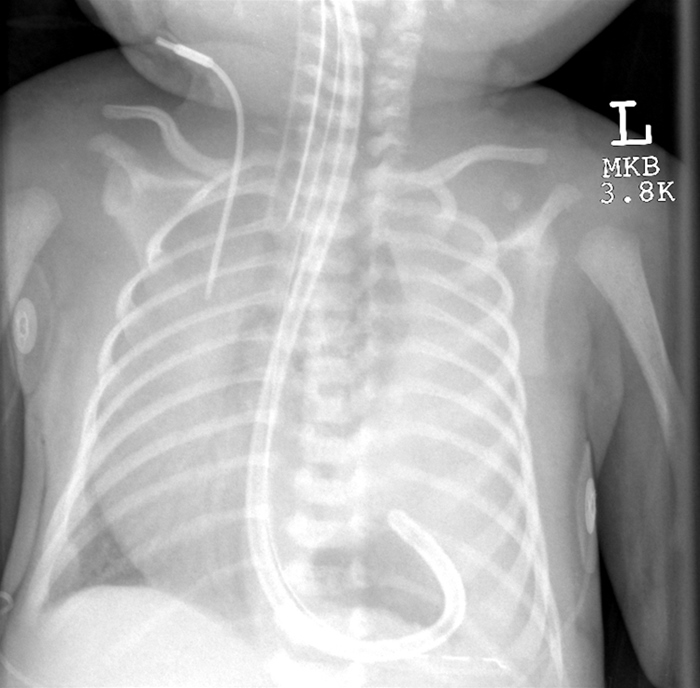
Which of the following is the most likely cause of this patient's respiratory distress?
A) Dilated airspaces with bronchiolar metaplasia
B) Increased pulmonary capillary wedge pressure
C) Loss of negative intrapleural pressure
D) Pulmonary surfactant deficiency
E) Underdevelopment of pulmonary tissue
Correct Answer:

Verified
Correct Answer:
Verified
Q23: A 32-year-old woman, gravida 1 para 0,
Q24: A newborn girl is evaluated in the
Q25: A 2-day-old infant is dusky and irritable.
Q26: A 32-year-old man presents to the emergency
Q27: Five measurements of blood oxygen saturation taken
Q29: A 3-day-old girl is brought to the
Q30: A 37-year-old woman is brought to the
Q31: A 30-year-old man comes to the emergency
Q32: A 4-hour-old girl with a cleft lip
Q33: A 32-year-old woman, gravida 2 para 1,