Multiple Choice
A 13-year-old boy is brought to the clinic due to progressive difficulty with breathing, hoarseness, and dysphagia. The symptoms began insidiously 6 months ago but have rapidly become worse in the last 4 weeks. The patient has no associated skin rash, pharyngeal pain, fever, weight loss, or loss of appetite. Medical history is unremarkable and the patient takes no medications. He is up to date on scheduled vaccinations. The patient's parents and siblings have no history of significant health problems. Vital signs are normal, and he is at 70th percentile for height and weight. Oropharyngeal examination reveals a large, red lingual mass. The patient subsequently undergoes excision of the mass; histopathologic preparation of the recovered tissue is shown in the image below. 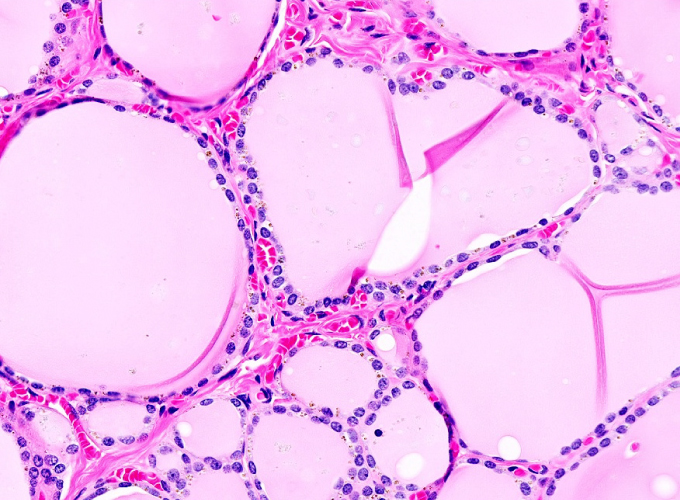 Failure of which of the following embryologic processes is most likely responsible for this patient's lesion?
A) Apoptosis
B) Differentiation
C) Fusion
D) Migration
E) Proliferation
Correct Answer:

Verified
Correct Answer:
Verified
Q42: A 3-year-old boy is brought to the
Q43: In normal female development, non-fusion of the
Q44: A 22-year-old woman at 14 weeks gestation
Q45: A 5-year-old boy is brought to the
Q46: A newborn is taken to the neonatal
Q47: A 16-year-old obese primigravida girl comes to
Q49: A 35-year-old man comes to the emergency
Q50: A 1-hour-old boy is in the neonatal
Q51: A 64-year-old man loses consciousness near the
Q52: A newborn is examined in the delivery