Multiple Choice
Table 17-3. The information in the table below shows the total demand for premium-channel digital cable TV subscriptions in a small urban market. Assume that each digital cable TV operator pays a fixed cost of $200,000 (per year) to provide premium digital channels in the market area and that the marginal cost of providing the premium channel service to a household is zero.
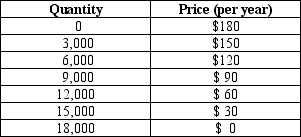
-Refer to Table 17-3.Assume that there are two profit-maximizing digital cable TV companies operating in this market.Further assume that they are not able to collude on the price and quantity of premium digital channel subscriptions to sell.How much profit will each firm earn when this market reaches a Nash equilibrium?
A) $25,000
B) $90,000
C) $160,000
D) $215,000
Correct Answer:

Verified
Correct Answer:
Verified
Q31: Table 17-24<br>Two firms are considering going out
Q44: Some business practices that appear to reduce
Q172: Table 17-12<br>Each year the United States considers
Q173: Figure 17-1. Two companies, ABC and XYZ,
Q178: Table 17-2. The table shows the town
Q180: Table 17-9<br>Only two firms, Acme and Pinnacle,
Q181: Table 17-12<br>Each year the United States considers
Q194: Table 17-21<br>The Chicken Game is named for
Q461: Table 17-14<br>This table shows a game played
Q500: Table 17-13<br>Two home-improvement stores (Lopes and HomeMax)