Multiple Choice
Human immunodeficiency virus (HIV) infects cells that have both CD4 and CCR5 cell surface molecules. The viral nucleic acid molecules are enclosed in a protein capsid, and the protein capsid is itself contained inside an envelope consisting of a lipid bilayer membrane and viral glycoproteins. One hypothesis for viral entry into cells is that binding of HIV membrane glycoproteins to CD4 and CCR5 initiates fusion of the HIV membrane with the plasma membrane, releasing the viral capsid into the cytoplasm. An alternative hypothesis is that HIV gains entry into the cell via receptor-mediated endocytosis, and membrane fusion occurs in the endocytotic vesicle. To test these alternative hypotheses for HIV entry, researchers labeled the lipids on the HIV membrane with a red fluorescent dye. 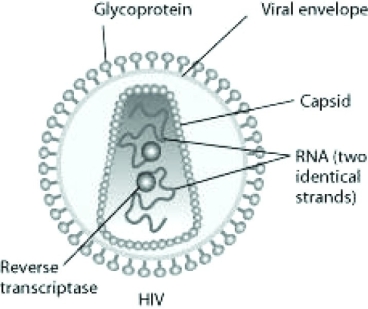 What would be observed by live-cell fluorescence microscopy immediately after HIV entry if HIV enters the cell by endocytosis first, and then later fuses with the endocytotic vesicle membrane?
A) A spot of red fluorescence will be visible on the infected cell's plasma membrane, marking the site of membrane fusion and HIV entry.
B) The red fluorescent dye-labeled lipids will appear in the infected cell's interior.
C) A spot of red fluorescence will diffuse in the infected cell's cytoplasm.
D) A spot of red fluorescence will remain outside the cell after delivering the viral capsid.
Correct Answer:

Verified
Correct Answer:
Verified
Q44: The force driving simple diffusion is _,
Q45: Which of the following processes is used
Q46: Which of the following statements best describes
Q47: Which of the following results is most
Q48: A new drug designed for the treatment
Q50: Which of the following statements best explains
Q51: Three lab groups carried out an experiment
Q52: Which of the following molecules would likely
Q53: Which of the following statements best describes
Q54: <img src="https://d2lvgg3v3hfg70.cloudfront.net/TB8578/.jpg" alt=" Which component in