Solved

Use a Graphing Utility to Select the Graph the Damping

Question 63

Multiple Choice

Use a graphing utility to select the graph the damping factor and the function below in the same viewing window.Describe the behavior of the function as x increases without bound. ​ Use a graphing utility to select the graph the damping factor and the function below in the same viewing window.Describe the behavior of the function as x increases without bound. ​   A) ​   As x → ∞, f(x)  → 0. B) ​   As x → ∞, f(x)  → 0. C)    As x → ∞, f(x)  → 0. D) ​   The function f(x)  is unbounded as x → ∞. E) ​   The function f(x)  is unbounded as x → ∞.
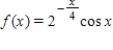

A) ​ Use a graphing utility to select the graph the damping factor and the function below in the same viewing window.Describe the behavior of the function as x increases without bound. ​   A) ​   As x → ∞, f(x)  → 0. B) ​   As x → ∞, f(x)  → 0. C)    As x → ∞, f(x)  → 0. D) ​   The function f(x)  is unbounded as x → ∞. E) ​   The function f(x)  is unbounded as x → ∞. As x → ∞, f(x) → 0.
B) ​ Use a graphing utility to select the graph the damping factor and the function below in the same viewing window.Describe the behavior of the function as x increases without bound. ​   A) ​   As x → ∞, f(x)  → 0. B) ​   As x → ∞, f(x)  → 0. C)    As x → ∞, f(x)  → 0. D) ​   The function f(x)  is unbounded as x → ∞. E) ​   The function f(x)  is unbounded as x → ∞. As x → ∞, f(x) → 0.
C) Use a graphing utility to select the graph the damping factor and the function below in the same viewing window.Describe the behavior of the function as x increases without bound. ​   A) ​   As x → ∞, f(x)  → 0. B) ​   As x → ∞, f(x)  → 0. C)    As x → ∞, f(x)  → 0. D) ​   The function f(x)  is unbounded as x → ∞. E) ​   The function f(x)  is unbounded as x → ∞. As x → ∞, f(x) → 0.
D) ​ Use a graphing utility to select the graph the damping factor and the function below in the same viewing window.Describe the behavior of the function as x increases without bound. ​   A) ​   As x → ∞, f(x)  → 0. B) ​   As x → ∞, f(x)  → 0. C)    As x → ∞, f(x)  → 0. D) ​   The function f(x)  is unbounded as x → ∞. E) ​   The function f(x)  is unbounded as x → ∞. The function f(x) is unbounded as x → ∞.
E) ​ Use a graphing utility to select the graph the damping factor and the function below in the same viewing window.Describe the behavior of the function as x increases without bound. ​   A) ​   As x → ∞, f(x)  → 0. B) ​   As x → ∞, f(x)  → 0. C)    As x → ∞, f(x)  → 0. D) ​   The function f(x)  is unbounded as x → ∞. E) ​   The function f(x)  is unbounded as x → ∞. The function f(x) is unbounded as x → ∞.

Correct Answer:

verifed

Verified

Unlock this answer now
Get Access to more Verified Answers free of charge

Related Questions