Chat with AI

Biochemistry 6th Edition by Reginald Garrett,Charles Grisham
Edition 6ISBN: 978-1305577206Biochemistry 6th Edition by Reginald Garrett,Charles Grisham
Edition 6ISBN: 978-1305577206 Exercise 17
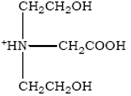
Plot the titration curve for Bicine and calculate how to prepare a pH 7.5 Bicine buffer solution Bicine (N, N-bis (2-hydroxyethyl) glycine) is another commonly used buffer in biochemistry labs. The structure of bicine in its fully protonated form is shown below:
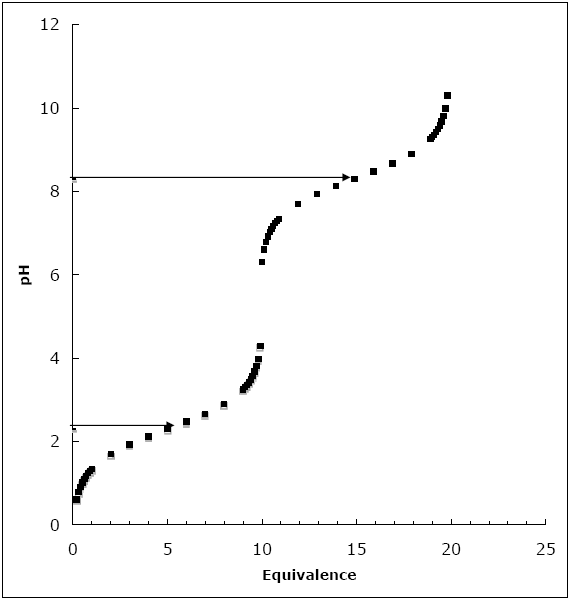
a. Draw the titration curve for Bicine, assuming the pK a for its free COOH group is 2.3 and the pK a for its tertiary amino group is 8.3.
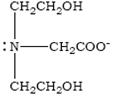
b. Draw the structure of the fully deprotonated form (completely dissociated form) of bicine.
c. You have available a 0.1 M solution of Bicine at its isoelectric point (pHI), 0.1 M solutions of HCl and NaOH, and ample distilled H2O. Describe the preparation of 1 L of 0.04 M Bicine buffer, pH 7.5.
d. What is the concentration of fully protonated form of Bicine in your final buffer solution?
a. Draw the titration curve for Bicine, assuming the pK a for its free COOH group is 2.3 and the pK a for its tertiary amino group is 8.3.
b. Draw the structure of the fully deprotonated form (completely dissociated form) of bicine.
c. You have available a 0.1 M solution of Bicine at its isoelectric point (pHI), 0.1 M solutions of HCl and NaOH, and ample distilled H2O. Describe the preparation of 1 L of 0.04 M Bicine buffer, pH 7.5.
d. What is the concentration of fully protonated form of Bicine in your final buffer solution?
Explanation Verified
a) The titration curve for Bicine will h...

Biochemistry 6th Edition by Reginald Garrett,Charles Grisham

Why don’t you like this exercise?
Other Minimum 8 character and maximum 255 character
Character 255